
If you’re planning a new website, one of the first questions is usually: how much is this actually going to cost?
The frustrating answer is that website pricing varies enormously.
You can build something yourself for a few hundred dollars, hire a professional for several thousand, or invest significantly more in a fully custom website with advanced functionality.
The difference isn’t simply about how many pages you get.
A professional website can involve strategy, structure, design, copy, responsive development, integrations, SEO foundations, testing and the small details that make the final experience feel polished.
So rather than asking “How much does a website cost?”, a better question is:
What kind of website does my business actually need?
Let’s break it down.
How much does a professional website cost in 2026?
For a small business, personal brand or service-based business, these are useful planning ranges:
DIY or template website: $0–$500+
You choose a platform or template, create the structure yourself and handle most of the design, content and setup.
Professionally customized template: $1,500–$3,000+
A designer works with an existing framework and adapts it to your brand, content and needs.
Custom professional website: $3,000–$10,000+
A more strategic project with custom visual direction, page structure, responsive design and development tailored to the business.
Complex or highly custom website: $10,000–$50,000+
This can include e-commerce, memberships, booking systems, custom functionality, extensive content, multiple integrations or larger-scale UX and development work.
These aren’t fixed industry prices. Two five-page websites can have completely different budgets depending on what needs to happen behind those five pages.
What actually determines the cost of a website?
1. Strategy and structure
A good website starts before the visual design.
What does someone need to understand when they arrive?
Which services should have dedicated pages?
What information builds trust?
What should happen before someone books, buys or sends an inquiry?
The answers shape the sitemap, page hierarchy, messaging and user journey.
For a very simple website, this may be straightforward. For a business with several services, different audiences or a more complex offer, there is significantly more strategic work involved.
2. Template vs. custom design
A template gives you an existing visual system to work with.
This can be a good option when the budget is limited or the website needs to launch quickly. The trade-off is that the structure and design possibilities are partly defined before your brand enters the picture.
Custom design starts with the business instead.
Typography, layout, visual hierarchy, imagery, spacing and page composition are built around your content and positioning.
That distinction matters particularly when your website is part of how clients evaluate the quality of your work.
A photographer, consultant, creative studio, wellness brand or premium service provider isn’t simply presenting information.
The website is also shaping perception.
3. Number and complexity of pages
More pages usually mean more work, but page count alone can be misleading.
A simple Contact page and a detailed Services page with multiple sections, custom layouts, FAQs, testimonials and conversion points aren’t equivalent.
A website might include:
- Home
- About
- Services
- Individual service pages
- Portfolio or Work
- Case studies
- Testimonials
- Blog
- FAQ
- Contact or Inquiry
Some pages can share a design system. Others require completely different structures.
That’s why professional website quotes are usually based on scope, not only a price per page.
4. Copy and content
Design can’t do all the work.
Your website also needs to clearly communicate:
what you do, who it’s for, why it matters and what someone should do next.
If the copy is already written and organized, the project may require less content work.
If the positioning, messaging and page content still need to be developed, that becomes an important part of the process.
The same applies to photography, portfolio images, testimonials, videos and other brand assets.
Strong content can completely change how premium and convincing a website feels.
5. Functionality
A portfolio website with an inquiry form is very different from a website that needs:
- online booking
- e-commerce
- payments
- memberships
- multilingual content
- email marketing integrations
- CRM integrations
- events
- complex forms
- gated resources
- custom filters or search
Every additional system needs to be planned, implemented and tested.
The more the website needs to do, the more development becomes part of the budget.
6. Mobile and responsive design
A professional website shouldn’t simply look good on a desktop screen.
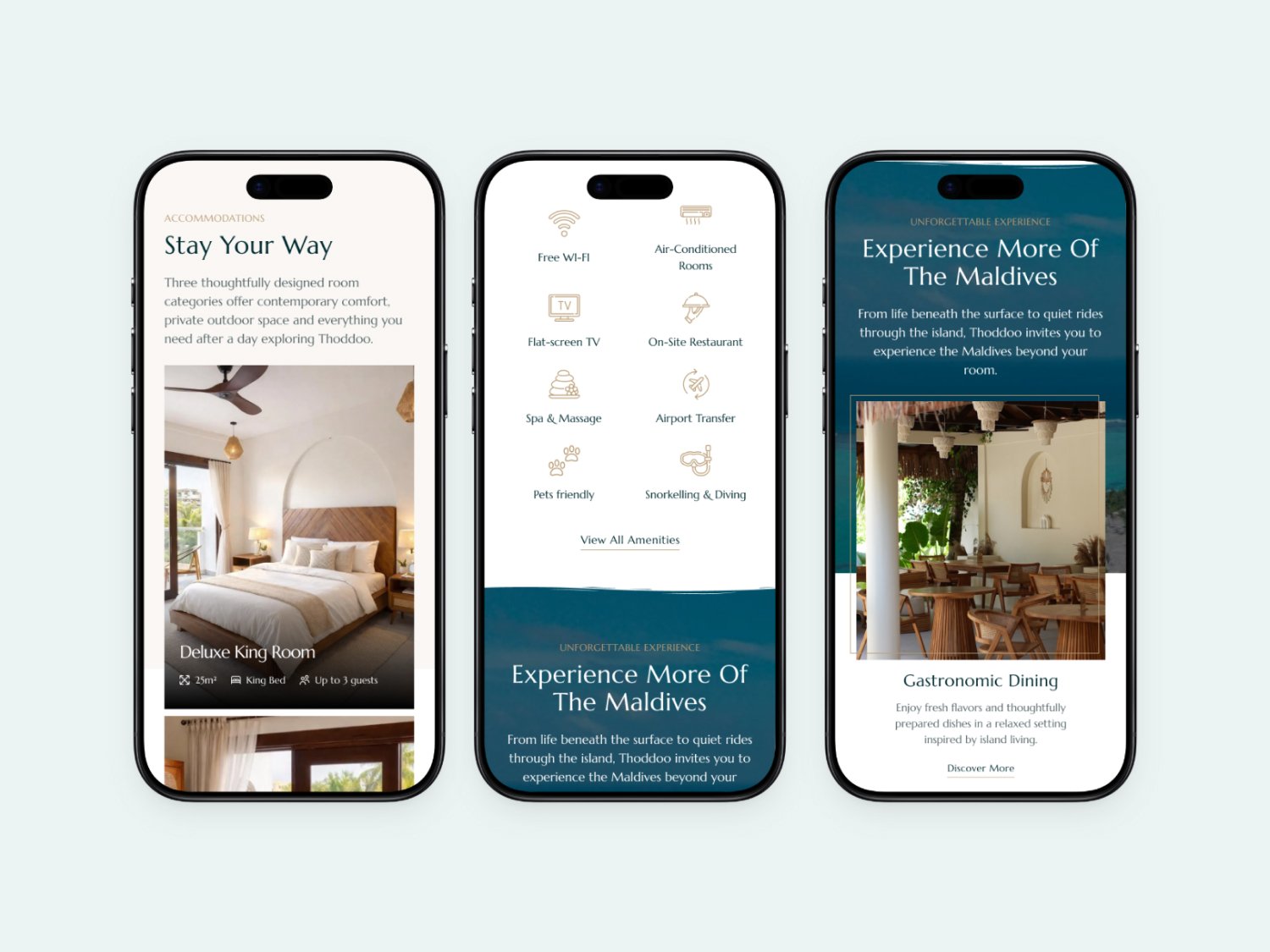
Layouts, typography, imagery, navigation and interactions need to work across screen sizes.
Sometimes a desktop composition that feels effortless requires a completely different treatment on mobile.
Responsive design is one of those parts of web development that visitors rarely notice when it works well — but immediately feel when it doesn’t.
7. SEO foundations
SEO is a much larger discipline than adding a few keywords to a homepage.
But a professionally built website should at least provide a solid technical and structural foundation.
That can include:
- logical page structure
- clear heading hierarchy
- SEO titles and descriptions
- readable URLs
- internal links
- image optimization
- mobile-friendly layouts
- performance considerations
- sitemap and indexing setup
If organic search is an important acquisition channel, deeper keyword research, content strategy and ongoing SEO may be a separate scope of work.
Why can two similar websites have completely different prices?
Imagine two businesses both need a five-page website.
The first already has branding, professional photography, polished copy and a clear page structure. It needs a clean implementation using an established design direction.
The second needs help defining the visual direction, restructuring its services, planning the user journey, developing page layouts, refining content and integrating a booking system.
Both projects may technically end with five pages.
They aren’t the same project.
This is why comparing website quotes only by page count can be misleading.
A proposal should tell you what thinking, design and implementation are included, not simply how many pages will exist at launch.
DIY, template or custom website: which one do you need?
A DIY website can make perfect sense when you’re at the very beginning of a business and need somewhere simple to send people.
You may not need a major website investment yet.
But as your business grows, the role of the website often changes.
Maybe your services cost more now.
Your brand has become more refined.
You’re attracting a different level of client.
You’ve outgrown the original structure.
Or you hesitate before sending someone your website because it no longer represents the business properly.
That’s usually where professional design becomes less about having a website and more about creating the right online presence for the brand you have today.
What should be included in a professional website project?
Every designer or studio structures projects differently, but a thoughtful website process may include:
Discovery
Understanding your business, audience, offers and goals.
Website strategy
Planning the sitemap, page structure and user journey.
Visual direction
Defining how the brand should translate into the digital space.
Web design
Creating the layouts, hierarchy and visual experience.
Responsive development
Building the site and adapting it across devices.
Content integration
Adding copy, photography, portfolio work and other assets.
Testing and launch
Checking functionality, responsiveness and the final experience before publishing.
The real value isn’t in receiving a certain number of pages.
It’s in having those pieces work together.
Don’t forget the costs after launch
The project fee isn’t necessarily the only website expense.
Depending on your setup, you may also need to budget for:
- domain registration
- website hosting
- premium plugins or software
- email services
- maintenance
- updates
- additional SEO or content work
For WordPress websites in particular, hosting quality, plugin choices, backups, updates and ongoing maintenance should be considered from the beginning rather than after the site goes live.
So, how much should you spend on your website?
There isn’t one correct number.
The right budget depends on where the business is now and what role the website needs to play.
If you’re validating a new idea, a simple website may be enough.
If your business already relies on reputation, referrals, social media or high-value services, your website has a different job.
It needs to support the level at which the brand is already operating — and make it easy for a potential client to understand your value, trust your work and take the next step.
A professional website isn’t expensive because it contains more decorative elements.
It becomes valuable when strategy, content, design and development work together to create a stronger experience of the business.
Planning a new website?
If your current website no longer reflects your brand — or you’re ready to create one properly from the beginning — I design and develop refined WordPress websites tailored to your business, audience and goals.
Tell me about your project